A Practical Review of the Famous Signature Font for Web Design
It was late afternoon, and I was wrestling with a client’s homepage hero section. The brand needed something elegant and personal, but the bold sans serif headline was feeling too generic. I swapped it out with Famous Signature, a stylish and incredibly elegant script font. Instantly, the mood shifted. The warm, cursive flow added a layer of sophistication and human touch that the previous typeface couldn’t deliver. That moment cemented for me how a single typographic choice can transform a digital space.
The Personality and Digital Appeal of Famous Signature
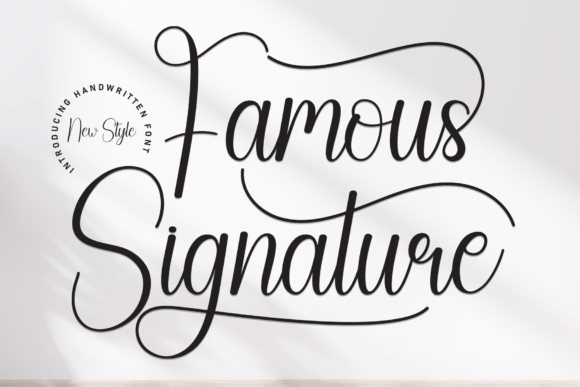
Famous Signature is more than just a beautiful script font. It possesses a confident, flowing rhythm that feels both premium and approachable. Its letters connect with a natural elegance, avoiding the overly casual feel of some handwritten fonts or the rigid formality of traditional calligraphy. This makes it perfect for digital brands that want to convey quality, creativity, and a personal connection.
In web design, this personality translates directly into emotional appeal. When used as a headline on a coaching website or a creative portfolio, Famous Signature signals craftsmanship and attention to detail. It invites the user in, suggesting a bespoke experience rather than a mass-produced one. For boutique online stores, especially those selling handmade goods, luxury items, or personalized services, this font can become a cornerstone of the brand’s visual identity online.
Strategic Uses in Web Layouts and Digital Content
The true test of any display font is how it performs across real layouts. From my testing, Famous Signature excels in specific, high-impact areas.
It’s ideal for hero titles on landing pages, where its elegance can immediately set the tone. On a product launch page for a high-end candle line, I used it for the main tagline “Find Your Light.” Overlaid on a dark, textured image, it created a compelling focal point that felt luxurious. Similarly, for section headings on a course sales page, it breaks up long content with visual interest, guiding the user through the value propositions in a more engaging way than a standard bold font.
Call-to-action buttons can also benefit from a touch of Famous Signature, but with caution. Using it for the word “Enroll” or “Shop Now” on a button adds a unique flair, but it must be large enough and placed on a contrasting background to ensure clarity. It works beautifully for logo text within website headers, especially for businesses with shorter names, providing an instantly recognizable brand mark.
However, its primary role is decorative and display-oriented. It is not suitable for body copy, navigation menu items, form labels, or any lengthy text blocks. Its intricate details become lost and readability suffers dramatically at smaller sizes or in long paragraphs. This is a font for making a statement, not for conveying dense information.
Readability and Responsive Design Considerations
Implementing a decorative script font like Famous Signature requires thoughtful UX decisions. On mobile screens, its flowing strokes need sufficient space. I recommend using it at a larger pixel size on mobile than you might on desktop to compensate for the reduced screen real estate. Always preview your designs on multiple device breakpoints.
When placing it over image banners or video backgrounds, ensure strong contrast. A light script on a light background image will vanish. Similarly, a dark script on a dark area will fail. Testing overlays on various sections of your hero images is crucial. For fast-loading content, using Famous Signature as a web font is generally fine, as it’s typically used in limited instances (like one or two headlines), not across hundreds of elements that could impact performance.
Pairing Famous Signature with Web-Friendly Typefaces
No font lives alone in a good design system. Famous Signature needs a strong supporting cast. For body copy and UI elements, a clean, highly legible sans serif font is almost always the best partner. Think of fonts like Open Sans, Inter, or Lato. They provide the necessary neutrality and readability, allowing the script font to shine as the decorative highlight.
For a more editorial or classic feel, such as on a blog dedicated to wedding planning or artisanal foods, pairing Famous Signature with a simple serif font for body text can also work beautifully. This combination leans into a traditional yet modern aesthetic. The key is to ensure the pairing creates clear hierarchy: the script for emotion and attention, the companion font for clarity and information delivery.
Licensing and Technical Details for Digital Projects
Before embedding Famous Signature into any client website, online store, or digital template, checking its licensing is a non-negotiable step. Most commercial font licenses cover web use via webfont embedding. Confirm that the license you purchase includes this right. Also, verify the file formats provided. You’ll need the standard font files for design software, but also check if webfont formats (like WOFF or WOFF2) are included or available for easy integration via CSS.
Explore if the font family includes multiple weights or styles. While Famous Signature is likely a single-weight script, having access to alternates or ligatures can add variety. For multilingual support, check its character set if your client’s brand needs to display in languages beyond English. This ensures your elegant headline doesn’t break when an accented character is needed.
Ultimately, Famous Signature is a powerful tool for web designers aiming to elevate a brand’s digital presence. It injects personality into layouts that often lean towards sterile minimalism. By using it strategically—for hero titles, key headings, and logo text—and pairing it with robust, functional typefaces for the rest of the interface, you can create websites that are not only usable but also memorable and emotionally resonant. It turns a functional page into an experience, which is, after all, what great web design is all about.